Madrid with Kids: Where Spanish Culture Meets Family Fun
From rowing boats in Retiro Park to dipping churros at San Gines, Madrid is one of Europe's most underrated family destinations. Here is our complete guide to exploring Spain's vibrant capital with little ones in tow.
I will be honest with you: Madrid was not originally on our family travel shortlist. We had done Barcelona, we had done the beach towns, and somehow I had gotten it into my head that Spain's capital was all business districts and late-night bars. I could not have been more wrong. When we finally spent ten days in Madrid with our three kids (ages 3, 6, and 9), it turned out to be one of the most naturally family-friendly cities we have ever visited in Europe. The parks are enormous, the food culture welcomes children with open arms, and the pace of life -- once you surrender to it -- actually makes traveling with kids easier, not harder.
If you are planning a trip to Madrid with your family, this guide covers everything we learned the hard way so you do not have to. From navigating the metro with a stroller to timing your meals around the Spanish schedule, consider this your mom-to-mom blueprint for an unforgettable Madrid adventure.
Retiro Park: Your Family's Home Base
If I could give you only one piece of advice about Madrid with kids, it would be this: stay near Retiro Park. This 300-acre green paradise in the heart of the city became our daily sanctuary, and my kids still talk about it months later. We visited almost every single day, sometimes twice, and never once got bored.
The boating lake (Estanque Grande) was the unanimous family favorite. You can rent rowboats by the half hour, and watching my husband attempt to steer while our three-year-old shrieked with delight was worth the trip alone. The lake is calm and shallow, so even with small children it feels safe. My tip: go in the late afternoon when the light is golden and the crowds thin out. The monument at the head of the lake makes for gorgeous family photos.
The Crystal Palace (Palacio de Cristal) is another must-see inside Retiro. This stunning glass-and-iron structure sits beside a small pond where turtles sun themselves on the rocks. My kids were more interested in the turtles than whatever art exhibition was inside, honestly, but the building itself is breathtaking. It is free to enter and usually has a contemporary art installation that older kids might appreciate.
Do not miss the playground near the Puerta de Alcala entrance. It is one of the better-equipped playgrounds we found in central Madrid, with climbing structures suitable for a range of ages. We also spent a memorable afternoon watching the puppet shows at the Teatro de Titeres, which run on weekends and are entirely in Spanish -- but the physical comedy translates perfectly for little ones.
The Royal Palace: Grandeur That Impresses Even Toddlers
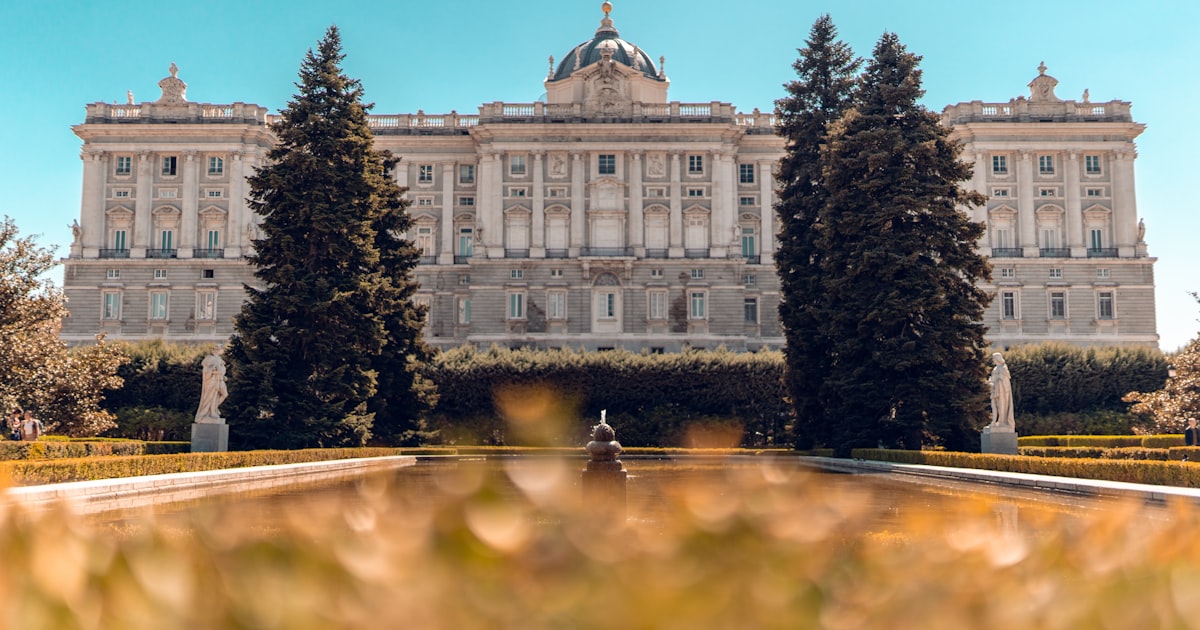
The Palacio Real is the largest royal palace in Western Europe, and even my kids -- who are not typically impressed by architecture -- stood with their mouths open in the throne room. The sheer scale of the place is enough to hold anyone's attention, and the ornate ceilings kept my six-year-old looking up for so long I worried about her neck.
Here is what you need to know for visiting with kids. First, strollers are not allowed inside, so plan accordingly. We used our travel stroller (our Babyzen YOYO2 has been a lifesaver across Europe) and checked it at the entrance. Second, the audio guide is included with your ticket and has a kids' version that turns the tour into a story. My nine-year-old was genuinely engaged with it. Third, visit right when it opens at 10 AM to beat the tour groups. We were through the main rooms in about 45 minutes, which was the perfect amount of time before small legs got tired.
The Changing of the Guard happens on the first Wednesday of each month (except in summer) and is a spectacular free show. If your timing lines up, absolutely make the effort to see it. The Plaza de Oriente in front of the palace is also a lovely spot for the kids to run around while you sit on a bench and take in the view.
Mercado de San Miguel: A Food Market Kids Actually Enjoy
I know what you are thinking -- a gourmet food market with kids sounds like a recipe for whining. But Mercado de San Miguel surprised us all. The visual spectacle of the market, with its beautiful iron-and-glass architecture and colorful displays of food, keeps kids entertained just by walking through. And the tapas-style format means everyone can choose their own small plates, which eliminates the usual restaurant power struggle of "I do not want that."
We loaded up on croquetas (the ham ones are exceptional), fresh fruit cups, mini portions of paella, and empanadas. My picky eater found plenty to love, and my adventurous eater got to try things like anchovy pintxos and Manchego cheese. It is not cheap -- this is a tourist market and prices reflect that -- but as an experience and a way to introduce kids to Spanish food culture, it is hard to beat.
A word of warning: it gets incredibly crowded between 1 and 3 PM. We learned to go at 11:30 AM for a late-morning snack, which felt civilized and calm by comparison. Having our own stainless steel snack containers meant we could also buy olives and cheese to take back to the hotel for later.
Plaza Mayor and the Old Town
Plaza Mayor is one of those places that looks exactly like the postcards, and somehow that does not diminish the experience at all. The enormous rectangular plaza, lined with terracotta buildings and painted murals, has been the heart of Madrid since the 17th century. My kids loved running across the wide-open cobblestones (a rarity in a crowded European city), and we spent a pleasant hour just sitting at one of the terrace cafes watching street performers.
From Plaza Mayor, you can easily walk to Puerta del Sol (the geographic center of Spain -- my nine-year-old thought standing on the Km 0 marker was very cool) and through the winding streets of the old town. The area around Calle Mayor and Calle de Toledo is full of old-fashioned sweet shops that sell handmade candy and pastries, which is basically kid-bait.
One thing I want to mention about walking in old Madrid: the streets are mostly pedestrianized or very narrow, which makes it feel much safer with kids than many European capitals. I never felt anxious about traffic the way I sometimes do in, say, Rome or Paris. Madrid's old town genuinely feels like it was designed for strolling.
The Prado Museum: Yes, With Kids (Here Is How)
Taking kids to the Prado sounds ambitious, but with the right strategy, it can be genuinely enjoyable for everyone. The key is to abandon any fantasy of seeing the whole museum and instead focus on a curated one-hour visit. Here is exactly what we did.
We went straight to the Velazquez rooms, because Las Meninas is one of those paintings that kids actually respond to. There is a little girl in a fancy dress right at the center, the artist painted himself into the scene, and you can play a game of figuring out who is looking at whom. My six-year-old was fascinated. From there, we visited the Goya "Black Paintings" -- particularly Saturn Devouring His Son -- which sounds horrifying for kids but my nine-year-old was absolutely riveted. Know your children, obviously, but do not underestimate their appetite for the dramatic and slightly creepy.
We rounded out our visit with Bosch's Garden of Earthly Delights, which is basically a giant, fantastical Where's Waldo for art lovers. My kids spent ten minutes finding weird creatures in the panels. Total visit time: about 55 minutes, and we left on a high note instead of dragging cranky children through room after room.
The Prado is free in the last two hours before closing (6-8 PM on weekdays), which is both a money-saver and a good time to visit since the crowds ease up toward closing. Bring kids' headphones so they can listen to the audio guide without disturbing other visitors.
Churros at Chocolateria San Gines
No article about Madrid with kids would be complete without mentioning San Gines. This legendary chocolateria has been serving churros con chocolate since 1894, and it remains one of the most purely joyful food experiences you can have in the city. The churros are crispy, light, and not overly sweet, and you dip them into a cup of thick, rich hot chocolate that is more like melted ganache than anything you would find at home.
We went twice -- once for an afternoon merienda (snack) and once after dinner at 10 PM, which felt incredibly decadent and special for the kids. San Gines is open 24 hours, so you can work it into your schedule whenever the craving strikes. The line looks intimidating but moves quickly. Order at the counter, grab a marble-topped table, and try not to eat everything in thirty seconds.
My three-year-old wore most of her chocolate, but that is what travel laundry is for.
Parque de Atracciones: Madrid's Amusement Park
When the cultural sightseeing needs a break (and with kids, it always does), Parque de Atracciones in Casa de Campo is a solid family theme park. It is not on the scale of Disneyland, but that is actually a point in its favor -- it is manageable in a single day, the lines are reasonable, and there are genuine rides for every age group.
The Nickelodeon Land area is perfect for toddlers and preschoolers, with gentle rides and character meet-and-greets. Older kids will love the roller coasters, particularly the Abismo and Tarantula. We spent about five hours there and everyone was satisfied, which is more than I can say for some bigger parks where you spend half the day in queues.
Getting there is easy via the Teleferico cable car from Paseo del Pintor Rosales, which is itself a fantastic family activity. The cable car crosses over Casa de Campo park and gives you sweeping views of the Madrid skyline. My kids rated the cable car ride higher than several of the actual amusement park rides.
Madrid Rio: The Best Playground You Have Never Heard Of
Madrid Rio is a massive urban park built along the banks of the Manzanares River, and it contains some of the most impressive public playgrounds I have ever seen. The main playground areas near Puente de Toledo feature climbing structures, zip lines, splash pads (operational in summer), and enormous slides built into the hillside.
What makes Madrid Rio special is that it feels like it was designed by people who actually have children. The play areas are thoughtfully separated by age group, there is ample shade (critical in summer), and there are cafes and kiosks nearby so parents can get a coffee while the kids burn off energy. We spent an entire afternoon here and my kids declared it "better than any playground at home," which is high praise from that crowd.

Zoo Aquarium de Madrid
Located inside the enormous Casa de Campo park, the Madrid Zoo Aquarium is a reliable half-day activity that works for all ages. The zoo is home to pandas (always a crowd-pleaser), a decent aquarium section, and a dolphin show. It is not the most modern zoo in Europe, but my kids did not care about that -- they cared about the penguins and the petting zoo, and both delivered.
If you are combining the zoo with Parque de Atracciones (they are in the same park), you could potentially do both in a very full day, but I would recommend splitting them across two days to avoid meltdowns. Casa de Campo itself is also wonderful for cycling -- you can rent bikes near the lake.
Tapas Culture with Kids: Embracing the Spanish Schedule
The single most important thing to understand about eating in Madrid with kids is the schedule. Spaniards eat late -- lunch typically starts at 2 PM and dinner rarely begins before 9 PM. Your first instinct will be to fight this and stick to your home schedule. My advice: do not. Embrace it.
Here is how we made it work. We ate a substantial hotel breakfast around 9 AM. Around 11:30 we would have a mid-morning snack (the Mercado, a bakery, or fruit from our snack containers). Lunch happened at 1:30 or 2 PM, which became our biggest meal of the day. After lunch, we leaned into siesta culture -- back to the hotel for quiet time, naps for the little one, and tablets with headphones for the older kids. Then we headed back out around 5 or 6 PM for the paseo (evening stroll), had merienda (afternoon snack) at a cafe, and ate dinner around 8:30 or 9 PM.
The beauty of this schedule is that it actually builds in rest time, which any parent knows is the secret to happy family travel. And eating dinner at 9 PM sounds crazy with kids, but by day three ours had adapted completely. Spanish restaurants are full of families at that hour -- you will see babies and toddlers out at 10 PM, and nobody bats an eye. It is genuinely liberating.
For tapas with kids, look for restaurants that have a barra (bar counter) where you can see the food on display. Kids can point at what they want, which eliminates the menu-translation struggle. Patatas bravas, tortilla espanola, croquetas, and jamon are all kid-approved staples. If you want to learn a few key food phrases, a good Spanish phrasebook makes the whole experience more fun for everyone.
Day Trip to Toledo
Toledo is just 30 minutes from Madrid by high-speed train, and it makes for a spectacular family day trip. The medieval walled city sits on a hilltop surrounded by a river gorge, and walking through its narrow streets feels like stepping into a storybook. My nine-year-old, who had been reading about knights and castles, was in absolute heaven.
The Alcazar (the fortress at the top of the hill) houses a military museum with swords, armor, and scale models of battles that kept my older two kids engaged for well over an hour. The Cathedral of Toledo is stunning but probably best for older children who can appreciate the architecture. For a kid-friendly lunch, the restaurants along Calle del Comercio offer outdoor seating and standard Spanish fare at reasonable prices.
One practical tip: Toledo is extremely hilly and the streets are steep cobblestone. A lightweight travel stroller is manageable but not ideal. If your youngest can walk or ride in a carrier, that is the easier option. We brought our travel stroller and made it work, but there were moments on the steep hills where I questioned that decision.
Best Neighborhoods for Families
Where you stay in Madrid matters more than in most cities, because the neighborhood determines your daily rhythm. Here are my top picks for families.
Retiro / Jeronimos: Our top recommendation. You are steps from Retiro Park, walking distance to the Prado and Reina Sofia museums, and the neighborhood is quiet and residential with plenty of family restaurants. The trade-off is that you are a 15-minute walk or short metro ride from the old town attractions.
La Latina: If you want to be in the thick of the tapas scene, La Latina is wonderful. Cava Baja is lined with some of Madrid's best tapas bars, and the neighborhood has a village-like feel. The Sunday Rastro flea market is a fun family outing. The downside is that it can be noisy at night.
Malasana / Chueca: Trendy, walkable, and full of interesting shops and cafes. These neighborhoods have a creative energy that older kids and teens will appreciate. Great brunch options (Madrid's brunch scene is surprisingly excellent), and you are central to most attractions.
Salamanca: If your budget allows, Salamanca is Madrid's upscale district with wide boulevards, designer shopping, and elegant apartment rentals. It is very safe, very clean, and very stroller-friendly. The downside is that it is quieter and lacks the lively atmosphere of the old town.
Getting Around: Metro Tips for Families
Madrid's metro is clean, efficient, affordable, and a perfectly viable way to get around with kids. Here is what you need to know. Children under four ride free. A ten-trip tourist pass is the most economical option for families. Most central stations have elevators, but not all -- the Madrid Metro website has an accessibility map that is worth checking before you plan your routes.
That said, I want to be realistic: getting a stroller through the metro during rush hour (roughly 8-9:30 AM and 6-8 PM) is stressful. During those times, we either walked, took a taxi, or simply stayed put. Madrid is a very walkable city, and most of the major family attractions are within a 30-minute walk of each other in the center.
For taxis, the official white taxis are metered and reasonably priced. There is a flat rate from the airport to the city center (around 30 euros), and drivers are generally patient with car seats and strollers. We also used ride-hailing apps successfully, though availability was occasionally spotty during peak hours.
Keep your luggage organized with color-coded packing cubes -- we assign each kid a color, which makes packing and unpacking at the hotel so much smoother.
Surviving (and Enjoying) Madrid's Summer Heat
I need to talk about the heat because it genuinely affects how you plan your days. Madrid in July and August regularly hits 38-40 degrees Celsius (100-104 Fahrenheit), and the sun is intense. This does not mean you should avoid summer entirely -- we went in late June and managed beautifully -- but you need a strategy.
The Spanish already have the answer, and it is called siesta. Plan your outdoor sightseeing for the morning (before noon) and the evening (after 6 PM). The hours between 1 and 5 PM should be spent indoors: museums, your hotel, shopping centers, or a long leisurely lunch in an air-conditioned restaurant. This is not laziness; it is survival.
A rechargeable portable fan that clips onto the stroller was one of our best purchases for this trip. The splash pads at Madrid Rio are also a godsend in summer -- we built entire afternoons around them. And do not underestimate the power of a cold horchata or granizado (slushie) from a street vendor.
Spring (April-May) and early fall (September-October) are genuinely the ideal times to visit Madrid with kids. The temperatures are warm but comfortable, the crowds are thinner than summer, and the city feels alive without being overwhelming.
Siesta Scheduling: The Secret to Happy Family Travel
I touched on this in the food section, but I want to emphasize it because it changed our entire trip dynamic. Building a proper rest period into your afternoon is not wasted time -- it is the single most effective strategy for avoiding the 4 PM meltdown that ruins so many family travel days.
Our siesta routine looked like this: return to the hotel by 2:30 or 3 PM, shoes off, curtains drawn. The three-year-old napped. The older kids had screen time or read books. My husband and I took turns either napping ourselves or doing trip planning for the next day. By 5 PM, everyone was recharged and ready for the evening ahead.
The Spanish structure their entire society around this rhythm, and once you stop fighting it and start embracing it, family travel becomes so much more sustainable. You end up with two distinct "sessions" each day -- morning and evening -- and you can plan one major activity for each. Less rushing, less overtiredness, more genuine enjoyment.
Final Thoughts
Madrid surprised us in the best possible way. It is a city that loves children -- not in a theme-park, everything-is-sanitized way, but in a genuine, cultural, you-are-welcome-at-our-table way. My kids ate better in Madrid than they do at home. They walked more than I thought possible. They learned that art can be weird and wonderful and a little bit scary. They discovered that the best chocolate in the world is served in a tiny shop that has been open since before their great-great-grandparents were born.
The late nights, the long lunches, the afternoon rest, the evening paseo -- it all adds up to a rhythm of life that is, honestly, better for families than the rush-rush-rush of many Northern European cities. Madrid does not just tolerate kids; it folds them into the fabric of daily life. And that, more than any single attraction or museum, is what made it one of our favorite family trips in Europe.
If Madrid is not on your list yet, put it there. Your family will thank you.
Pin this guide for your next family trip to Madrid Comfortable walking shoes are essential - European cities are best explored on foot. Do not forget a travel adapter - European outlets are different from back home. Bring a reusable water bottle for everyone - staying hydrated makes a huge difference with kids. Pack a compact first aid kit - cobblestone blisters are real. A good pair of kids headphones will keep everyone happy during travel days.

Beach Day Essentials
Here are our tried-and-tested picks for this trip:
Recommended Products
Rick Steves Spanish Phrase Book
A family-friendly Spanish phrasebook with practical phrases for restaurants, hotels, and getting around with kids.
View on AmazonBabyzen YOYO2 Travel Stroller
Ultra-compact travel stroller that folds small enough for overhead bins and navigates cobblestone streets with ease.
View on AmazonBuddyPhones Kids Headphones
Volume-limiting wireless headphones perfect for keeping kids entertained on flights and long metro rides.
View on AmazonOlarHike Packing Cubes Set
Color-coded packing cubes that keep the whole family organized and make hotel living so much easier.
View on AmazonHandFan Portable Rechargeable Fan
Rechargeable clip-on fan that attaches to your stroller or bag -- a lifesaver in Madrid summer heat.
View on AmazonLunchBots Snack Containers
Leak-proof stainless steel snack containers for carrying cheese, crackers, and fruit through long sightseeing days.
View on Amazon* Affiliate links: We may earn a commission from purchases made through these links, at no extra cost to you. See our full disclosure.